Showing posts with label Fiction. Show all posts

Thursday, 31 May 2018

Review: "The Dead Father's Club" by Matt Haig


Matt Haig’s wonderful take on Hamlet-meets-Patrick Ness’ A Monster Calls is an absolute delight to read – but be prepared to have your heart melted and broken and deliciously/masochistically destroyed in a variety of ways. It’s the tale of a young boy, son to a pub landlord who dies under suspicious circumstances, an anxious little chap struggling with the loss of his father while having to navigate the tricky seas of a dodgy uncle honing in on his mother and the inheritance… if that wasn’t enough, he speaks to the ghost of his father who demands revenge and thinks up plots to stop the union of Dodgy Uncle and Mum. It’s an incredible burden to place on a kid’s shoulders, and of course young Philip feels overwhelmed, but his sense of duty, love for his father and fear for his mother leave him little choice than to follow suit. In his young mind, it’d be betrayal to go against his parents’ will, but even more so, to deny his father’s last wish. More so, to have to save his father from a fate worse than death.
It’s an intense contradictory mix of the inner world of a grieving child, of loyalty, of bravery, of grief and of weights a child’s shoulder shouldn’t carry. Even the least maternal soul may well go all protective and parental on the young protagonist. And the twist in the outcome is just as unexpected as life’s turns itself.

Review: "The Last Family in England" by Matt Haig


Matt Haig has solidified himself among my go-to authors, especially when I need a dose of the profound, of something that affirms life without forgetting to validate its struggles.
There aren’t really any books so far I have read by him that disappointed me, although with How to Stop Time he has set himself a benchmark of genius that will be hard to beat.
The Last Family in England he wrote, as he said, after his breakdown – writing, I fully agree, is an incredible therapeutic tool – and he clearly poured the intensity of is experience at the time into this. It’s now being re-released, with a gorgeous new cover to match the design of his previous masterpiece.
It’s an unusual story, to be sure, narrated by the family dog, Prince, a Labrador, who is utterly devoted to his family. I adored the background story of a code of ethics, practiced by Labradors, but ignored for the sake of self-gratification by other breeds, to the point of ridicule.
Prince’s family is in trouble. It’s an accelerating clusterf**k of considerable proportions affecting and involving all family members, to the point of tragedy and utter heartbreak (without being soppy, oh I love how Matt Haig does it)… and poor Prince has tasked himself to what he considers his duty – keeping the family together and happy, consulting his mentor, another Lab, who patiently instructs him in all ways the code entails. But difficulties keep coming, and they even come from places Prince never expected.

I thought it a perfect parable on religion, on its function, appeal and failings – how you can follow instructions to the letter with the best intentions without being guaranteed a desired outcome… and how to come to terms with not having all the answers, with life not going your way, but that doing your best, even if it’s not enough, is sufficient.

While that sounds utterly depressing, it is actually liberating. Your heart will ache after reading this, but feel fuller and wiser, and perhaps even a little bit more prepared for it.

Lots of Pupper Love,

Patty

Monday, 18 September 2017

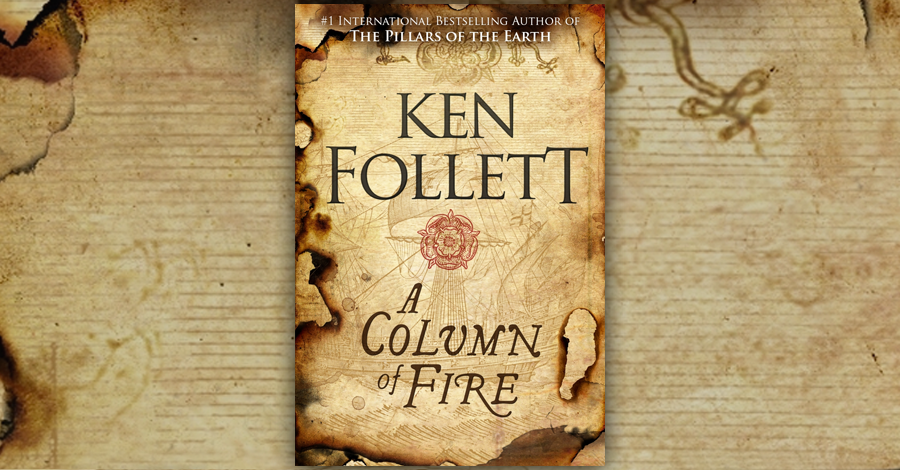
Review: Ken Follett's "Column of Fire"


Few novels have so totally and utterly gripped and consumed me as Pillars of the Earth has. Only few novels I return to read and re-read again, and Pillars is one of those I consistently and passionately recommend to pretty much readers of any genre because the storytelling, tension, characters and atmosphere are universally beyond compare. Pillars converted me to historical fiction, Pillars is one of the few books that gives me an itch to write myself. There is a reason this book has a cult following, we weren’t kidding, y’all. In my nigh 12 years as a bookseller, I have made countless people sit down to just read the first page, most of whom would quickly become so absorbed they would be rendered unresponsive to hell fires and high waters. I have never had a customer come back to me and tell me they hated it. In fact, many told me they consequently became Folletteers. (That’s a term now. I retain all rights and royalties. But when the Kool-Aid comes out, I had nothing to do with it, just saying…)

Now there’s a build-up! But then, it’s preaching to the choir, because I assume most people reading this review have been gagging for this sequel anyway. I myself have been hyperventilating since I saw Follett’s Instagram pictures of doing research into Elizabethan England and put two and two together many moons ago.

But there’s the dilemma. With the massive gaps between the three books (Pillars was released in 1989), each of them had plenty of time to work themselves up onto an unrivalled Olympian pedestal, putting more pressure onto the follow-up. I love World without End, but had to read it a couple of times to succumb to Pillars Polygamy.  And the key was to accept WWE as a book in its own right, not one attempting to be its literary mother. (Parenting analogies, see! We’ve come to that. There goes Larkin’s “your children are not your children”.)

The same goes for A Column of Fire. Face it. It is not Pillars of the Earth. It’s set over 400 years later, so it couldn’t be. All the original characters are long dead, though I was glad to see Prior Philip got a decent tomb out of it, even though it gets abused as a hiding place for Elizabethan teenage canoodling. But the red-haired Jack Jackson gene is still going strong. The female leads are still feisty. Kingsbridge Cathedral is still standing in all its glory, even though the Puritans have some beef with its riches and idolatry and might have clobbered some saint statues (how dare you touch Jack’s fine handiwork!). The monastery is falling apart though, thanks a lot, King Henry VIII.
Kingsbridge has expanded, but is still torn by polarised families and its usual villains and heroes, that being exacerbated by the outright war between Catholics and Protestants, which thwarts, in true Follettesque Romeo & Juliet fashion, the romantic relationship between protagonists Ned Willard and Margery Fitzgerald. But the cathedral is no longer a focal point in the story, and Kingsbridge, despite being a returning setting, is no longer the centre of the story. A large part is set in France and the bitter, murderous feuds between Catholics and Huguenots, and the focus is on Elizabeth I and her network of spies trying to stay in power while Catholics scheme left, right and centre to get rid of her; Mary Stuart lingers in various prisons trying to communicate with the outside world, and generally everyone is constantly under threat of being either a heretic or a traitor, depending on where the fickle winds of power blow.

Kingsbridge characters play key roles in this epic battle, and oh do they play them well. The heroes are as deliciously human, flawed and tormented as the villains are delightfully Waleran/Lady Reganesque, with their trademark sadistic psychopathy. A group of characters you’ll grow to love embody the larger conflicts they inhabit in cinematic storytelling, bringing this turmoiled era home to you like a missile. It’s a cracking historical epic which you will just devour (it took me less than two weeks) and thoroughly enjoy once you manage to let go of the idea that this is not attempting to be a rehash of Pillars. And you’ll probably grow to love it even more once you re-read it.
Follett truly has outdone himself once again.  I bow to thee, master.

With Elizabethan curtsies,

Patty


Friday, 21 April 2017

Review: Matt Haig's "How to Stop Time"

Tom Hazard doesn’t age. Or rather, he ages very slowly. Born in the middle ages, his mother is suspected of witchcraft to keep her son young forever. But rather than magic, it’s a condition – the opposite to Progeria, the rapid-aging disease.

 Sounds great, doesn’t it? Having all the time in the world to do whatever you want. Time is a commodity that becomes more precious with every day we live, with every day we’re moving closer to death.

And surely Tom makes use of that. He is well-travelled, and he is a master of countless musical instruments, a skill that, at some point, earns him a job alongside Shakespeare himself. But there is a downside to his existence. Be it the ages of witch hunts and superstition or the ages of science and experimentation, Tom needs to keep a low profile at all times to remain safe. He is forced to move on and start a new life every few years to evade suspicions; the weight of life, of more life experience humans are meant to carry weighs him down. And worse, he is condemned to outlive everyone he loves. Falling in love can have fatal consequences, something he is warned against and yet cannot avoid. Unable to retain closeness to other human beings leaves him desperately lonely and empty. Only the drive to find his lost daughter, struck with the same condition, keeps him going and searching for her through the continents and centuries. Until a secret society offers him help… which, however, comes at a price that might be too high.

 And here I pause, trying to put into words how much this book has touched me. What can I say – I adore Matt Haig anyway, but he has completely outdone himself. How to Stop Time is MAGNIFICENT. Easily his best novel so far, and definitely one of the best books of the year!

It’s not just an amazing premise and story in itself, it’s also deeply philosophical.
Matt Haig, like no other, puts his finger on the human condition and wraps it in a tale you’ll be unable to forget. It’s about the burdens of humanity and of being human, and of too much of it. It’s about history going in cycles, and the futility of existence and yet finding meaning in it all; about the imprisonment of love and the impossibility of retaining it, yet having only fleeting meaning without it. I found myself highlighting passages because they struck me as utterly profound or resonated with me so much I felt myself hum like a tuning fork. Haig writes it so well you can easily believe his protagonist has lived for centuries, because Tom Hazard is so complex, yet so simple, his character shaped by having to bear the cross of several lifetimes, and Haig's wisdom and insight into human nature is practically uncanny.

 If you read only one book this year, make it this one. Hermann Hesse has found a new rival.

With Booky Love,

Patty 

Monday, 18 April 2016

Winner of the Book Review Competition

    We're proud to present the winner of our Book Review Competition:
    Rosie Mullins, from year 7 at Woodgreen School!

    Rosie delivered a detailed and coherent review which had the right amount of plot information to whet the reader's appetite, but without giving the story away, she talked about special features she enjoyed, and she gave it a well-reasoned age rating, which, interestingly, is lower than what most of us adults would have it estimated at, suggesting a whole new debate as to whether we're underestimating/ overprotecting our children? (Mind, this here bookseller had read James Herbert and Stephen King by age 12 and is perfectly fine.*) Well done, Rosie, and keep that passion for books burning!
      
    "Gone by Michael Grant is a book that follows the lives of Sam, his friends and his enemies; they are stuck in a dome that has fallen over their home town of Perdido Beach and everyone over the age of 15 has POOFED (disappeared). However, people begin to take sides, food runs out, and eventually water too runs out, but also, lots of people begin to develop strange, but interesting powers… The stranded children find themselves exposed to the threat of conflict, danger and death, as the idea of living in a world without adults quickly becomes a sudden reality. With no phones or televisions working either, the town soon becomes a prison for these 'survivors', and with no way to get help, time is running out for each remaining individual: the day you turn fifteen is the day you disappear, just like everyone else. The children of the dome fight for survival until not very many people are left in the scary Fays (the name of the dome). But, there is a way out and Sam and the others try to find out!
         This thrilling book series has something for everyone: it’s a book of mystery, comedy, romance, horror, suspense, sadness and it makes you feel so many other feelings. In my opinion, Gone and the other books, all the way to the final book, Light, are highly dark even for the young adult audience which they are aimed at. Grant is successful in writing scenes of death, mutilation, and moral dilemmas form the basis of the plot in each book in very graphic detail. There are so many reasons why I love this book, and you would too if you read it.
          Firstly, unlike many other books, each chapter begins with an amount of hours/mins that are counting down to a big moment at the end of the book (but you don’t know what that is, unless you carry on reading, and you can guess). Furthermore, a second reason why I love this series is that each chapter ends with a cliff hanger, hooking you on making you want to read the next chapter.
          How does series make me feel? The way the book is written makes you feel like you are in the dome with them. For example one of my favourite characters, Astrid, makes you feel happy, annoyed, sad and worried for her all at the same time. Each one of these characters in this fantastic book has a unique personality, which is studied in has layers of meaning and understanding. Astrid is known as ‘Astrid the genius’, she is Sam’s girlfriend, and most respect her, but, she is strong minded and can fight if she needs to. Another favourite of mine is Sam, he is looked up to and everyone expects him to lead the fays. He is one of the ones who has a special power – he can shoot killer beams of light from his hands, which can burn through metal and strong walls.
          Was it easy to read? This book is quite easy to read once you have begun, you just need to remember the names of people and that’s easy to do. Grant tells everyone’s side of the story, so you may have more than one point of view, which makes the book more interesting. Once you begin, and get into it, you don’t want to put it down.
         Who would I recommend this book to? Well, as this book is very violent and contains many other inappropriate things to younger children; furthermore it is quite gory, gruesome and graphic, I would say at least 11+. Additionally, as this book has equal boy characters to girls, it doesn’t matter what gender you are – it would be enjoyed by both. However I think that the people who enjoy this book most are readers who like sci-fi books (such as: The Hunger Games, ranging to Stephen King admirers). Frighteningly gripping Gone, and the successive novels in the series, will not fail to delight most readers.
    Once I had read Gone, I felt as if I had lived through the Fays with the surviving characters. I was pleased with the way it ended, it made you feel satisfied with the book. This book will be enjoyed by all who read it, and all of the 6 books were great, each ending on a cliff hanger – which leads onto the next thrilling book. I found that this book was so well woven together all the way though. Gone by Michael Grant is a book for all!"
    (*friends/family/shrink might disagree)

Book Review: Looking for Alaska by John Green


Reviewed by Hannah Train, age 12, Wood Green School
 
I loved Looking for Alaska for several reasons. Firstly, the general idea of the story. The meaning and fine line between living, loving and dying, and how it affects the people and things around you. Secondly, I also loved the layers of meaning around the main characters life and death (Alaska) and how it affected her friends in college, close or distant. Thirdly, I like that you could interpret the book in different ways from someone else, as it could leave a different message to different people. Such as Alaska’s quote: ‘How will we ever get out of the labyrinth of suffering.’

Looking for Alaska made me feel the pain of losing someone you loved and not knowing what happened and why. You can really feel the pain and confusion when they find out Alaska had died. You can distinguish the personality of the different characters by how they reacted to the news and it really shows how they cope with this loss. The book was generally easy to read, but I would not choose to read a book because the print is too small and I don’t chose books because it’s too hard or easy. But I would say this book is for 12+ as the whole plot is quite mature.
I enjoyed lots of parts of the book, firstly, it really made me think very deeply about living and dying and the mysteries of life. It really made me think how Alaska died, was it an accident or was it suicide? Secondly, it also left me guessing and wondering after the book was finished. Thirdly, some of the things Alaska said were really meaningful and had several layers of meaning behind it. This book will stay with me forever.

Book Review: Shadow by Michael Morpurgo


Review by : Chloe Louise Lewis, age 8, Witney Community Primary School


I am reviewing my favourite book: Shadow. It's written by Michael Morpurgo and illustrated by Christian Birmingham. It’s about a boy called Aman and his mother who escape from Afghanistan and come to England. On their way to England they find a springer spaniel. Aman decides to call her Shadow. She leads them to England. Sadly they got caught by the police and were taken to a detention centre. Aman tells Matt [his best friend] the story of how he and his mother got taken to the detention centre in the first place. Matt and his grandpa and all his other friends and family try to get Aman and his mother out of the detention centre. Unfortunately it started to rain and some of Matt’s family went home. His aunty and uncle aunty Mina and uncle Mir came from London. They travelled all this way and it didn’t work. Matt and his grandpa soon found out that Aman and his mother had left to go to the airport in the early hours of the morning. Then a rainbow came out. Matt felt that he had hope still left in him. The officers behind the gates told Matt, Grandpa and everyone else who was still there to go home that they would never come back again. Then out of nowhere came a black car. To Matt’s surprise Aman and his mother were waving to Matt and his grandpa and all the other friends and family who were there. The car stopped and out stepped a young girl about 9 years old she had shadow on the lead and she helped a tall looking man in an army uniform out of the car. Aman ran over to shadow and flung his arms around her neck.

 
I loved that on every chapter there’s a clear and interesting title that made me want to read on. The book made me feel excited to read the next part to the story. I think that the fun bits were that Shadow lead Aman and his mother to England. It made me feel adventurous and happy. It was easy to read because the words were big and bold and were spaced out so it was clear to see.

Book Review: Divergent by Veronica Roth

Review by Ella Shadbolt, 12, Woodgreen School


"I feel like someone breathed new air into my lungs. I am not Abnegation. I am not dauntless. I am Divergent.”

Imagine living in a fractured society, where at only sixteen you are forced to make a choice. A choice that will change your life. Do you leave your family, friends, everyone and everything you love and care about? Or do you stay? And what happens if you don’t fit in?

Veronica Roth’s Divergent, the first novel in the compelling dystopian series, follows Beatrice, better known at Tris, as she is forced to make this decision, always knowing she will never be part of this broken civilisation.

The story follows her as she takes a giant leap to a whole new life in Dauntless- the faction known for bravery. With secrets to hide, mysteries to uncover, and skills to learn, Tris struggles to overcome her fears and enemies. Through this she seeks to discover those she can trust. But can she leave behind the past and battle on through the future…

Divergent is extremely thought-provoking, questioning how can we suppress a young personality in order to try and keep a simple society. The human race is so unique and complicated that everyone is a combination of emotions and talents; debating the right to be different and the hostility that is forced upon the unique.

As you read each page of this marvellous creation, I can guarantee you that everyone will be gripped. Whether you enjoy adventure and action, or prefer a romantic tale, Divergent will grab you with its many cliff hangers.

Divergent is an unforgettable read that will ensure you read the second book 'Insurgent' without pausing for breath in between. So venture into this unfolding world and see where your future lies within the walls of this amazing book...


Tuesday, 16 February 2016

When Featherbones took flight

"That's what it means to be mad. To be stripped of meaning, stripped so bare you feel like the skin's been torn from your back and you're just bones. Bare bones and nerves, stuck out in the cold, where it stings, it burns like nothing you've felt before." 

FEATHERBONES


Well, we were definitely mad with joy on a horrifically drenched Saturday in February when the delightful Thomas Brown from Madley Park, Witney, and former Woodgreen School student, joined us to present us his latest baby, novel number 2, Featherbones

The initial reading was a fine sample, but to truly appreciate the prose, the rhythm of the tale and the blurring of reality and Felix's delusions, you really need to read the whole thing! (hint hint) 


After, Thomas revealed to us about his inspirations for the novel, which include the amazing artist Kate MccGwire and her creepy yet beautiful feathery sculptures, author Poppy Z. BriteClive Barker and Marilynne Robinson's watery imagery from Housekeeping.


The shop was absolutely packed, both with
people and a happy buzz. 
Many thanks to all who came and made this day as wonderful as it was. And thank you to our own bookseller Matt! for climping lofty heights to get some good photos. 
We totally sold out, but fear not, more are to come.

- Love, Patty 

Tuesday, 17 November 2015

Thoughts on Selznick's The Marvels


Our former bookseller Lewi, poet, writer and aficionado of all things art and Victorian, posted an interesting comment on Facebook about Brian Selznick's beautiful book The Marvels - nutritious  food for thought:

"I go to bed tonight a little saddened. I have just finished reading the most beautiful book, recommended to me by my even more beautiful friend Patty, which is 'The Marvels' by Brian Selznick. It is a tale of two halves where 60% or so consists of hand-drawn scenes which tell one story (and reminded me of a visual representation of a Sigur Ros song), while the rest is dedicated to the written word, which frames the first story in another incredibly delicate, plot-twisting, happy-and-sad-at-the-same-time theme which rounds everything off so sweetly. Without giving too much away, there are a gay man and a gender-fluid girl in the story (who just so happen to be gay and non-binary without having the story revolve around those aspects), which, considering the book is primarily aimed at teenagers, I think it is an absolutely incredible way of showing diversity and a 21st century attitude to "different" types of people with whom we share this planet, no? 

However, upon looking to amazon to see what others thought of it, I was upset and, to be honest, quite angry about how many adults consider the aforementioned themes as, and I quote, "controversial", "not suitable for a young audience" and "requiring parental involvement". 
I'm sorry, but what? How on earth can the account of a fictional man expressing his love for another man, and a girl who does not wish to necessarily be represented as such, be considered as "not suitable" and "controversial"?! How else will teenagers, especially those who are struggling with gender and sexuality identity issues, empathise with others, real or not, who are or have gone through the same thing? How else will they learn tolerance for homosexuality and so forth, if this is being attempted to be taken away from them by fully grown adults - a lot of those reviews were from teachers too! What is it going to take to make people realise that it is okay to have gay and gender-fluid characters in books and for it not to affect the storytelling and the plot and so forth? 

I don't know if it is because of the friends I have or how I was raised or my liberal, mostly left-wing views but I see absolutely no problem with any of it in the slightest, and people suggesting that others do not buy this book for their children because of those "issues" (yet they are quick to say how good Selznick's other books are, which contain heterosexual, gender-conforming characters) are purely adding to the problem by creating a stigma around two already very sensitive issues. I thought this was 2015, not 1815. Many, many people are becoming more open-minded, I know, and I think that is fantastic, and I know those reviews are just electronic words on an electronic screen but they have dampened my spirits and shed a perhaps unwanted light on the fact that we still have a long way to go in the name of social equality."

Sunday, 18 October 2015

Review: Karyn Langhorne Folan's Survivor Stories (Doomsday Kids # 5)


I've reviewed the Doomsday Kids installments previously, still not giving up hope that this fantastic self-published series will receive the due and deserved attention of big publishing houses, just as Howey's Wool, Weir's The Martian and The Rabbit that Wants to Fall Asleep did. 

Amy’s Gift left us hanging cleverly, just giving away enough to know that the Doomsday kids had finally reached the safe haven they had left the Mountain Place for, nearly perishing on the arduous journey there, a near-death Amy rescued mid-birth by no one other than Liam’s mother, and all kids taken to  Survivor City’s hospital to recuperate.

And we all took a collective sigh of relief. Right?

Well, turns out it was too good to be true after all.

Survivors’ Stories, book 5 in the series, starts, it turns out, after considerable time has passed, and the first we meet is not Amaranth or Liam or Nester, but Jax. And it turns out he has not seen his friends for a long time. Slowly, through his, and later, Katie’s and Samir’s eyes (remember him?), it unravels that Survivor City is anything but a picnic. Overcrowded, with not enough food, water, medical aid or even housing for everyone, the supposed haven is a hellhole of starvation and corruption, run by a psychopathic general with social darwinist aspirations in which the weak and ill – all of those not able to contribute –  are cast aside, killed or left to die. A caste-like system controls everyone’s activities and connections, dissidents are being “floated”, former friends kept separated to avoid rebel activity from growing. The nuclear winter may be over, but now another sinister effect of the atomic bombs becomes apparent: with a damaged ozone layer and atmosphere, man is forced to work at night to escape the lethal UV rays and merciless heat.

Before, in the Mountain Place, at least the kids had each other. Now they’ve got no one. Alone in a postnuclear Orwellian nightmare, Jax, Katie and Marty are risking their own lives trying to find each other and their friends. But the brief moments of making contact come at a huge cost.

 I won’t give much more away except that the descriptions of their dismal existence, their attempts to connect, the friendships, loyalties and betrayals they face are heartbreaking, and that the entire time I found myself missing the core gang, of whom you mostly get glimpses and rumours. The horrors inflicted on this little community after they already had to go through so much is gut-wrenching and in some ways a greater horror than “just to die” of nature’s indifferent exposure – their suffering now is a choice of misguided morality and perceived necessity of a twisted man with solid delusions of grandeur.

But there is hope in this tale, and love, intense friendship and sacrifice that makes you plough through the pages, more than likely choking back tears, needing to find out what happens next. And I can guarantee you your heart will be put through the shredder – evidence of Folan’s skill to create wonderful, three-dimensional characters with a depth and warmth you will never forget.

An intensely gripping continuation in the Doomsday Kids series that does not just even for one minute refuse to ease up on being the incredible, cinematic reading experience it is, but also serves as an urgent and topical warning in the current Trident debate. 


Monday, 4 May 2015

Our Fiction Book of the Month: Perfidia

James Ellroy is no stranger to crime fans. His L.A. Quartet novels have, at the latest, been put on the map for even non-crime readers by their popular cinema adaptations The Black Dahlia and L.A. Confidential.

Ellroy, dubbed as the "demon dog of American crime fiction" by director Reinhard Jud back in the nineties, and whose dark past is a strong source for his writing (the unsolved murder of his mother inspired The Black Dahlia), has just started a second L.A. Quartet, this time set in the Second World War, with Perfidia being the first in the series. It's an epic door stop of a book, with the powerful L.A. noir atmosphere fans have come to love so much, in the context of a world-changing event: the attack on Pearl Harbor.
 
Both the Guardian and the Independent have given it smashing reviews, so it might well be that summer read you've been waiting to sink your teeth into.
 
 
But as none of us would want you to just take our word for it, here is a cheeky sample.


Sunday, 1 March 2015

Timur Vermes' Look Who's Back - an unmissable Waterstones Book Club read


Oh the joy when I heard this gem had finally been translated into English! A bestselling phenomenon in mein Fazerland since its publication in 2012,  for which the film production has already begun, it had tickled my curiosity since I first heard about it, and delighted me when it was gifted to me by the ‘rents last Christmas. A novel about Adolf Hitler waking up in a 2011 Berlin car park, rescued by a newsagent who thinks him a hilarious and scarily convincing impersonator and promptly introduces him to some media fellers who in turn jump on the chance to line their pockets and boost the ratings by giving him some air time.
The bewildered Fuehrer, meanwhile, has to adjust to modern society, its gadgets, people, multiculturalism and social media addiction, and slowly planning, naively, clumsily, but with chilly calculation, his return to power, thus delivering a commentary on modern Germany that is equally frightening and hysterical. Let’s just say, when I read the German original, it was like hearing Adolf speak. I don't know if Vermes studied the speech patterns of Hitler before he started writing, but he did a wonderful job rendering his persona in his book. And the translation, although it inevitably lost the classic Berlin dialect spoken by some of the characters, managed to get incredibly close to the original.

It’s obviously funny seeing Hitler in his 1940s mindset interact with the contemporary age, similar to seeing Socrates and Billy the Kid stumble their way through 1980s mall strip California in “Bill and Ted’s Excellent Adventure”, but at the same time it scathingly satirises an increasingly dumbed-down, historically uninformed or indifferent multi-media generation that is too distracted by Reality TV, sensationalist headlines and Facebook Likes to see the danger the “born again” Fuehrer really poses.

Needless to say, there is a debate whether it is acceptable to make Hitler a subject of comedy. But it’s been done before countless times, with “The Producers”, with “The Dictator”, some more gratuitous, some with enough satire in it to render it more “acceptable”. If anything, “new” about it is only that the Germans are increasingly seen to have a sense of humour about their own history. Not in a belittling or insensitive manner, mind. Hitler and the Holocaust continue to remain a serious subject over there, deeply embedded in the German mentality and Constitution. But the – in my book – ridiculous and unhelpful self-flagellation by people who were barely the glint in daddy’s eye in 1945, undermining any approach of the subject in a grown-up way, is finally starting to cease; Hitler as a subject of comedy becoming less and less restricted to the terrain of risqué Stewart Lee-type German comedians, and is particularly well-balanced in this novel.

Comedy will always remain in the grey areas of acceptability, and perhaps that’s exactly what keeps us on our toes and debating; to speak the truth like a jester, in joke form to escape medieval beheadings or modern censorship. Take from this book what you will. I for one both enjoyed and pondered it. Thoroughly.


- Patty

Wednesday, 25 February 2015

Award-winning author Catherine Chanter at Witney Library!

Don't make plans for 23 March! At 7:30, at Witney Library, Catherine Chanter, an Oxfordshire author who won the Lucy Cavendish Prize 2013 for her debut "The Well", which is now being published by Simon & Schuster, will talk and answer questions about her new novel.

To take it from the experts, Jessie Burton, author of the glorious "The Miniaturist", is raving about "The Well":

"There was so much that impressed me… The boldness with which Catherine depicts her characters in their bravery and emotional squalor was incredible... whilst she showed how we manipulate each other, she also focused on the harder, hidden truths about how in turn we want, or need, to be manipulated ourselves.... Set against the natural beauty of the Well, Catherine also paints an exquisitely painful portrait of a marriage under threat - not just from an unnerving meteorology, but the tempests of the mind.... The Well asks us where do we seek refuge, and why? And perhaps it shows us that what is left after all is suffered, is love. Battered, weathered, at the end of the novel it comes cresting over the hill, a herald of relief. Bravo, that woman. I loved this book!"

Good, evocative writing is enough to get this here bookseller totally engrossed in a book. Just listen to this!

'One summer was all it took before our dream started to curl at the edges and
stain like picked primroses. One night is enough to swallow a lifetime of lives.'

But what is it about?
 
When Ruth Ardingly and her family first drive up from London in their grime-encrusted car and view The Well, they are enchanted by a jewel of a place, a farm that appears to offer everything the family are searching for. An opportunity for Ruth. An escape for Mark. A home for their grandson Lucien.
But The Well's unique glory comes at a terrible price, and quickly Ruth's paradise becomes a prison, Mark's dream a recurring nightmare, and Lucien's playground a grave.
With the pace of a thriller and the heart of a literary smash hit, The Well is a dark and devastating tale of obsession, motherhood and the complexity of female relationships, wrapped inside a gripping whodunit.


TICKETS ARE FREE, INCLUDE REFRESHMENTS AND CAN BE COLLECTED FROM WITNEY LIBRARY, WELCH WAY FROM THE COUNTER.

TICKETS ARE LIMITED AND WILL BE OFFERED ON A FIRST COME FIRST SERVED BASIS

Wednesday, 21 January 2015

Doomsday Kids 3: Amaranth's Return - A Review

With book 3 in the Doomsday Kids series, Folan has truly revved up the tension and the stakes.
I have previously reviewed Book 1 and Book 2, and it's safe to say that I've become absolutely hooked.
In fact, when I, after an agonising wait, got this instalment through, I tore through it in just a few hours. Who needs sleep anyway? This was just a few weeks ago, and already I have read it again. And even though I knew what was going to happen, it still gripped me as much as the first time around.

One thing I absolutely love in this series is how each book focuses on a different character and manages to refine them into multi-faceted beings that live and breathe and love and ache and fight and survive and fail in your head. Not that the other instalments don't characterise them enough, but in this format you really get the whole gist.

This time, the story is told from Amaranth’s point of view, the troubled, rebellious outcast with a dark past – and finally we learn where she came from, the demons she is fighting, her previous history with the other characters, and how it has shaped her into the person she is now, explaining all her erratic and angry behaviour. Yet there is no cliché to her at all.
 
           "Amaranth's Return" has some seriously dark undertones, reminiscent of Cormac McCarthy's The Road, a new level of grit and maturity that will make this book perfect reading for adults as well, showing what humans on the edge of survival can be truly capable of. There is no whitewash, no light version of the post-apocalypse. There were a few times when I had to put the book down and catch my breath. And if I had had any doubts in book 1 whether a postnuclear world had been “adequately” described in terms of how horrific it will be, those doubts are gone. Amaranth and Rod, who has been reduced to a pitiful shadow of his former self by radiation sickness, are on their way to find out if Rod's mother has survived, facing a world which makes their mountain place look like a holiday camp. Outside the bubble of their well-prepped shelter, as inadequate as it may have seemed to them at first, the outer world has well and truly gone down the toilet. Humans have been reduced to feral creatures out of sheer need to survive. Even the more organised groups have lost all their humanity.
It’s an equally  horrific and heartbreaking world, impossible for a reader to abandon or forget. There is cannibalism, a sinister, cultish commune, and a climatic moment of true cosmic horror. But there is also bravery, despite the tensions tightening bonds between – of all people – Wasserman and Amaranth, an old character returning and a new character being introduced. By the end you will quite possibly be bawling, over someone you never thought you'd care so much about.            

           It’s rare that I have been so emotionally involved in something that is (misleadingly) classed as teen fiction. This is quite possibly some of the best self-published fiction I have ever read, along with Hugh Howey’s Silo trilogy and Andy Weir’s The Martian. I have worked as a bookseller and reviewer for years and have seen much less deserving writing receive publishers’ attentions… in fact, I want to slap them silly for not headhunting Karyn Langhorne Folan.

All of it is written in such a fantastic descriptive way that the story unfolds like a film in your head… a film that will leave you quite possibly pumped with adrenaline and your nails bitten to the quick.

And again the story ends with a magnificent cliffhanger that makes you want to scream in frustration that you have to wait for the next instalment.

But at least it's coming. At least it's coming!

Not reading this is NOT an option!


 Lots of booky love,
 
Patty :)


Thursday, 15 January 2015

The Bees by Laline Paull


Inexplicably, The Bees is a book I'd normally have never picked up. Just goes to show that one can be blinded by one's own literary rut, and looks can be deceiving. I should really know better, because The Miniaturist by Jesse Burton, which not just has been a Book of the Month for us, but is also in our first 2015 Bookclub AND our Book of the Year (and Specsavers', I might add!) was a completely unexpected surprise for me, and now I'm raving like a lunatic (a happy, safe one!) about it. But one digresses. Bees. We're here for the Bees.
 
 
Anyways, I started reading The Bees, and it made my jaw drop.
It's basically Watership Down meets Divergent meets The Handmaid's Tale meets 1984. With bees. WHAT MORE COULD YOU WANT FROM A BOOK??
 
Beautifully descriptive, it sucks you right into the bee life, like a strange Kafkaesque Honey-I-shrunk-the-kids-and-turned-them-into-bees experience - it does what a book should do, create a film in your head that involves your every sense.
Obviously I won't give anything away, but if this doesn't entice you, read what author Laline Paull writes about the inspiration of the book. I promise you if you're not hooked and intrigued then, then it's possibly because you have a bee-phobia.
 
In which case, I apologise.
 
 
Wholeheartedly from the hive-mind,
 
Patty :)

Sunday, 21 September 2014

Review: Adam Nevill's "No One Gets Out Alive"


Adam Nevill’s latest fiendish work has reached new heights of terrifying. Famous for his skin-crawl-inducing paranormal horror, which so far has come in various gruesome flavours: Scandinavian pagan folklore, Lovecraftian madness, creepy dolls and Victorian taxidermy, all enough to rob me of any decent sleep, his books always had a classic horror elegance to it - but they are positively cushy compared to the brick-sh**ting real-life horror he’s unleashed on us now.

      Fret not, the paranormal element is still well and truly present. But as I agonised, glued into protagonist Stephanie’s skin, my nails bitten to the quick, flippin' ghosts, unsettling as they were, were the least of my problems. If anything, they pointed to the bigger problem: Knacker McGuire and his psychotic cousin, the token Evil Private Landlord of an unregulated rental market we’ve all had to deal with in our student years at some point (and some of us, beyond), and which, more often than not, is run by deluded psychopaths keen on milking the naivety or desperation of the modern destitute, knowing full well they cannot be beaten by lawyers tenant can’t afford or Small Claims Courts, which are notoriously incapable of enforcing their rulings.

     This book, my dears, is not about charming-albeit-evil Victorian dolls scratching on your bedroom door with ancient, cracked porcelain hands in the dead of night. This one’s Eden Lake meets Silent Hill.

   Let me call it Landlord Horror. The sheer every-day survival terror you will only experience when your options have become severely limited by crippling poverty. OK, maybe the landlords we had to deal with weren’t as bad as Knacker. But what unites the real and this fictional one is that, if you’re as poor as protagonist Stephanie, with an irregular pittance of an income from a job that works you into exhaustion, no security net, scraping by on pennies day by day, with friends and family either too far, too indifferent or too alienated to help, you are completely at the mercy of whoever owns the roof of the house you’re sleeping under. And you better just hope and pray Knacker McGuire isn’t that man.

    Nevill paints the picture of Stephanie’s bleak existence and her helplessness masterfully. She’s so used to encountering dodgy characters that she probably thought she could handle this one. And it’s not that she has much choice. Desperation makes her rush into a rented room agreement. And once Knacker, oscillating between creepy and sleazy and downright antisocial, has his hands on her deposit, she is stuck – without that money her options are hardly more than the streets. Desperation is what makes her rationalise the warning signs until it’s too late. Lack of sleep saps her of energy, because late at night she hears crying and voices in other tenants’ rooms – tenants she only seems to encounter briefly in dimly lit staircases and who don’t seem to want to speak to her.
      In short, it doesn’t take long for her to feel like she is losing her mind, and to learn that Knacker and Fergal are capable of worse things than just making her feel severely uncomfortable.
      And when Knacker’s cousin Fergal – who makes Knacker look like a school boy in comparison -  arrives on the scene, and a dark presence inflicts violence in the rooms around her, things begin to spiral out of control. 

    And the comparison to Silent Hill? You’ll see what I mean when you get there. If you want your cosmic horror element, Knacker and co are just the gateway: it will billow into this before long and will fully fledge in the second half of the book, which will hound you with paranormal terror that is inescapable and won’t stop at anything before it breaks you.

     Again, I’d be a party pooper if I gave the story away, of how bad things get. I don’t see why I should ease the way for you, dear reader, by preparing you. You must suffer the horrors as I have, because, let’s face it, we love it – why else would we be reading this?

     Let me just say this: considering that around the time I started reading this book, I found out I have to move house myself, and reading about the depressing, existential anxiety-inducing familiarity of trying to find a place that is a) not a hovel, b) in my price range (which is virtually impossible in Witneyshire), and c) not run and occupied by a Knacker McGuire, made my stomach churn, and this book seemed to hit all my fear buttons with a hammer. It made me want to clamber for the property ladder just to not have to rent anymore.

    Give Mr Nevill this: he might well be the modern Dickens who opens up the public eye to the need to regulate and restrain private landlords. True, this is a horror novel, but the terror lies in familiarity with exaggerated features.

This here novel definitely comes as a cautionary tale: read the small print of your contract. More so, insist on a contract. And don’t move into the first place on offer. Small Claims Courts cannot fight hell.


P.S. Adam – thanks for giving Waterstones a cheeky cameo! ;)


Sleep-deprivedly yours,

Patty

Sunday, 7 September 2014

Our September Children's Book of the Month: The Maze Runner

When I read The Maze Runner by James Dashner a few years ago, I was gripped, and tearing my hair out that it initially didn't seem to find the recognition it deserved. It was similar with The Hunger Games, but sometimes books just need to come into their own.
Surely Hollywood's garishly blinking arrow has helped draw attention to it, too, with the movie being released soon. It's sad that it perhaps needed the Dystopia Rage kickstarter of The Hunger Games, because it's a terrific book in its own right. But the main thing is, it's being read. Hurrah and huzzah! And because we love it, we made it our Children's Book of the Month.
 
The story starts with young Thomas waking up to a lift door cranking open, and a bunch of kids staring at him. He doesn't know how he got there and what happened to him, but he now finds himself at the centre of a humongous stone maze. In the day, there are exits opening, leading out into the maze, and he soon learns that for a long time the strange kids venture out there, trying to find a way out. One sinister thing is that the maze changes overnight, so any progress made in a day becomes redundant. The other is that they have to be back by sunset, because then the gates close, and anyone trapped outside in the maze will be at the mercy of the Grievers... horrific monsters, half animal, half machine.
As if that wasn't enough to deal with, there are also tensions among the kids, as Thomas finds out soon enough...
 
This is the start of an utterly riveting teen dystopia series that lovers of the Gone series by Michael Grant and The Hunger Games by Susanne Collins will utterly enjoy. Mind, while it is classed as Teen literature, it makes more than a cracking read for any adult fan of the genre, too. Have a peek at the first chapter here. Some find it takes a little while to get going, but just a little persistence will bring much reward and make it nigh impossible to extract it from your hand.


Saturday, 6 September 2014

Our Fiction Book of the Month: "All the Light We Cannot See"

Our book of the month, "All the Light We Cannot See" by Anthony Doerr, has already created quite a stir in the U.S.. The Washington Post described it as: "I’m not sure I will read a better novel this year than Anthony ­Doerr’s 'All the Light We Cannot See'. Enthrallingly told, beautifully written and so emotionally plangent that some passages bring tears, it is completely unsentimental — no mean trick when you consider that Doerr’s two protagonists are children who have been engulfed in the horror of World War II."

The Boston Globe equally enthuses, and the L.A. Times loves that "Doerr's novel is ambitious and majestic without bluntness or overdependence on heartbreak — which is not to say it won't jerk those tears right out of your head."

On this side of the pond, reactions have been similar: The Guardian states that "this novel will be a piece of luck for anyone with a long plane journey or beach holiday ahead. It is such a page-turner, entirely absorbing".

There's good reason we heart it so much, see?

If you're still unsure, don't fret: read the opening chapter here or pop in the shop to have a gander.

Toodles,
 
Patty :)

Thursday, 17 July 2014

Our Fiction Book of the Month for July

Our Fiction Book of the Month for July, The Miniaturist by Jessie Burton, is not just a feast for the old peepers. Of course, I was instantly charmed by the intricate vintage-y dollhouse cover art (and surely not just I have been guilty of obtaining a book just for its outer beauty?)... and not just I. Check out this incredible piece of chalk art created by Jess from Waterstones BishopsStortford.

(I totally would try that with our A-board, too, but whenever I do, the creatures in the picture just whimper "Kill meeeee!" But one digresses...)


Or this incredible display done by Waterstones Nottingham (yeah, cheers for showing us all up, Notts ;)!)


But this book is nothing short of a beaut on the inside, as well. Read the first few pages of the book here.

See? Told ya.

Burton's little masterpiece has been compared to "Girl with a Pearl Earring", "The Goldfinch" and the writings of Sarah Waters. But regardless whether you like those three, give it a shot. We do heart it.


Charmed,
 
Patty